Trailer unavailable

Series · 2017 · Documentary

The Great War in Numbers

★7.2 2017 1 Season TV-MA

The Great War in Numbers tells the complete story of World War I - from outbreak to conclusion - and the fragile peace that followed. It was a war unlike any other before it, with a number of firsts along the way. Seventy-milliion men were mobilised to fight around the world, from the trenches of the Western Front to the Middle East and Africa.

Seasons & episodes

1 season · 6 episodes

Episode 01

The March to War

Oct 4, 2017 · 45 min

The opening episode tells the story of the outbreak of war in 1914. In the decades since the last European War the world changed. In Europe and America industrialisation has created unprecedented wealth, for some. At the same time the Empires of Britain, France, Russia and Germany have carved up the globe. The British Empire is the largest the world has ever seen ruling over a quarter of the world's population. But despite their vast territories and immense wealth, the imperial powers are still not satisfied. When two shots are fired in Sarajevo in the summer of 1914, killing the heir to the Austro-Hungarian Empire and his wife, it pits Empire against Empire and engulfs the world in a conflict that will eventually claim 18 million lives.

Episode 02

Weapons Of War

Oct 11, 2017 · 45 min

By the beginning of 1915 the horrific killing power of machine guns and artillery had taught all sides that the only way to survive was to find shelter and dig in. Nowhere was this illustrated more dramatically than at the Battle of Neuve Chapelle in March 1915, where a handful of German soldiers with machine guns held off a British force of 9,000 men. Eventually 25,000 miles of trenches would cut across Europe. With conventional weapons unable to provide a breakthrough, new technologies took the war into the sky and under the sea. Britain started the war with just 193 planes, but by the end British factories were producing over 30,000 new aircraft a year. Germany responded to the British naval blockade by unleashing their U-boats on allied shipping, but the sinking of the liner Lusitania with the loss of 1197 lives, 128 of them Americans, came close to bringing the US into the war.

Episode 03

Descent Into Hell

Oct 18, 2017 · 45 min

By January 1916 the war had become a stalemate. Millions had died and yet no side had achieved a decisive breakthrough. Austria-Hungary tripled the size of its armies to five million men. Germany doubled its forces to seven million. And in Britain men were volunteering to fight at the rate of up to 33,000 a day. 1916's Descent into Hell began at the French fortress city of Verdun. Entire villages were wiped off the map and both sides suffered over 300,000 casualties. At sea the British and German fleets fought the greatest naval battle in history, off the Jutland peninsula in the North Sea. Thousands died, but again no side achieved a crushing victory. And on the Western Front the newly recruited Pals battalions led the attack at 7.30am on 1st July 1916. A day that has gone down as the blackest day in the history of the British Army.

Episode 04

The Home Front

Oct 25, 2017 · 45 min

The Great War also had an impact on those on the Home Front, where the demands of modern warfare transformed the lives of the young and the old, women and children. One of the biggest changes was experienced by women across Europe and North America, Australia and New Zealand. Before 1914 most jobs were virtually closed to women. The war would change that. Meanwhile governments intervened in every area of daily life: in Britain the Defence of the Realm Act banned bonfires and whistling for taxis, carrying cameras and feeding the birds. Russia would even go as far as banning vodka. And in America the Sedition Act outlawed disloyal language, threatening people's right to criticise the government. Propaganda and censorship became a feature of daily life as governments attempted to hide the awful truth of the war from those on the Home Front. Censorship also slowed down the postal service but soon people had greater worries than delays to the post.

Episode 05

Total War

Nov 1, 2017 · 45 min

Episode five tells how, after 1916 and the hell of the Somme and Verdun, the imperial powers redoubled their efforts to crush their enemies. In Germany the new commander in chief, Paul von Hindenburg, and his deputy, Erich Ludendorff, demanded that German industry doubled its output of shells, to 11 million a month, and treble production of machine guns, artillery and aircraft. To meet these new targets Germany needed three-million more workers. Those who were too young or too old to fight had to work in the munitions factories. More than a million PoWs would be put to work, hundreds of thousands of inhabitants of occupied Belgium, France and Russia would become forced labourers. Sixty-five thousand of these men would be used to build a massive new line of fortifications along the Western Front, the Hindenburg Line. The Hindenburg Line was built in almost total secrecy. The Allies were stunned.

Episode 06

Endgame

Nov 8, 2017 · 45 min

Episode six tells how the numbers will favoured one side, then the other in 1918. When the Bolsheviks took Russia out of the war, millions of German and Austro-Hungarian troops were freed up to attack Britain and Belgium, France and Italy. But across the Atlantic, America was training an army of two-million men. The German commanders, Hindenburg and Ludendorff, knew that if they didn't achieve victory in 1918, they faced defeat in 1919. In 100 days what had looked like a German victory was turned into defeat, and Germany's politicians were forced to ask for an armistice. The blood-letting lasted until the very last minute. Eleven-thousand men were killed or injured on 11th November 1918, the last day of the war, but the peace settlement demanded by the victorious Allies did not bring peace. The war to end all wars was over, but the anger and hatred it had generated found new outlets, and the rise of fascism and communism soon plunged Europe into war again in the decades to come.

About the series

The Great War in Numbers poster
Audience score
★ 7.2 /10

based on 4 votes

Synopsis

The Great War in Numbers tells the complete story of World War I - from outbreak to conclusion - and the fragile peace that followed. It was a war unlike any other before it, with a number of firsts along the way. Seventy-milliion men were mobilised to fight around the world, from the trenches of the Western Front to the Middle East and Africa.

DocumentaryWar & Politics

Where to watch The Great War in Numbers

The Great War in Numbers is available to stream on Flicksy via 6 verified sources, aggregated from publicly available embed providers. The documentary has 1 season and 6 total episodes, rated 7.2/10 by 4 viewers.

Frequently asked

How many seasons does The Great War in Numbers have?

The Great War in Numbers has 1 season with 6 episodes in total.

Is The Great War in Numbers still on the air?

The Great War in Numbers is currently in production and returning for new episodes.

What network airs The Great War in Numbers?

The Great War in Numbers airs on Histoire TV.

When did The Great War in Numbers first air?

The Great War in Numbers first aired on October 4, 2017.

More like this

Similar series

See all →
Apocalypse: World War I

Apocalypse: World War I

2014

Faith of the Century: A History of Communism

Faith of the Century: A History of Communism

1999

The World Wars

The World Wars

2014

ANZAC Girls

ANZAC Girls

2014

The Crimson Field

The Crimson Field

2014

Tony Robinson's World War 1

Tony Robinson's World War 1

2015

World War I: The Complete Story

1964

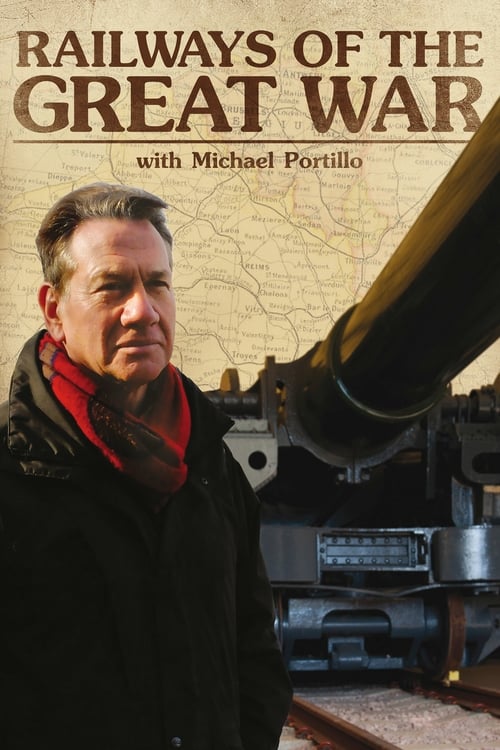
Railways of the Great War with Michael Portillo

Railways of the Great War with Michael Portillo

2014

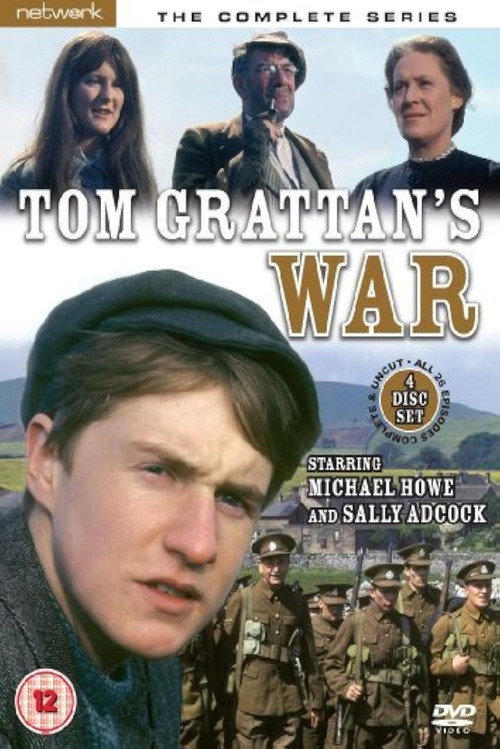
Tom Grattan's War

Tom Grattan's War

1968

In Flanders Fields

In Flanders Fields

2014

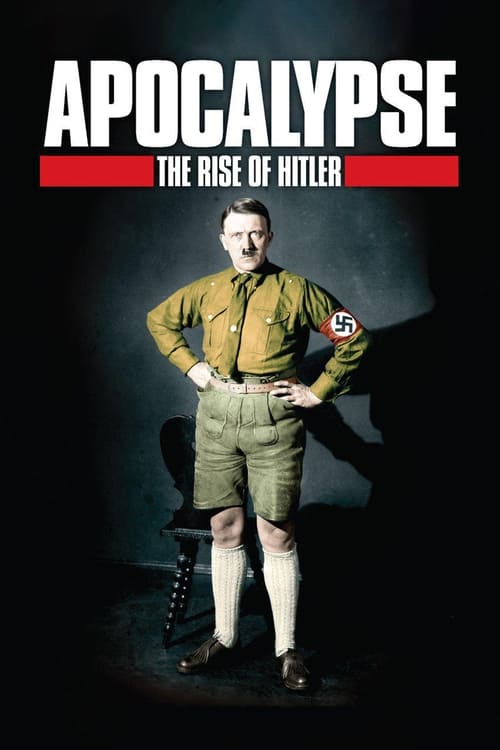
Apocalypse: The Rise of Hitler

Apocalypse: The Rise of Hitler

2011

World War One

1964

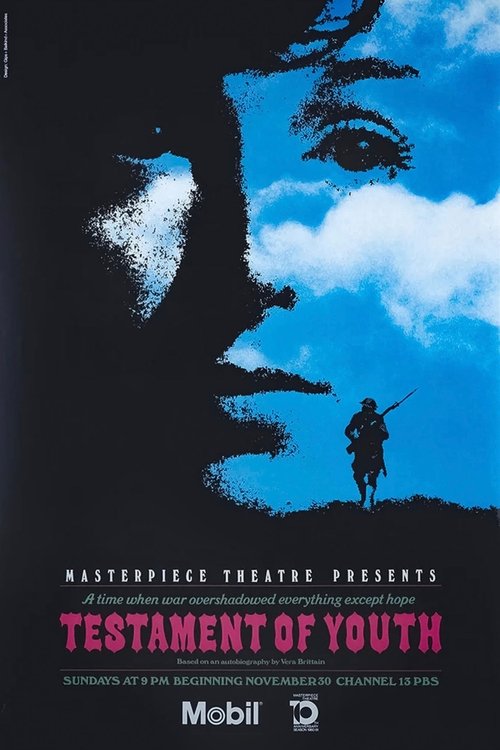
Testament of Youth

Testament of Youth

1979

Warplane

Warplane

2006

Parade's End

Parade's End

2012

1914-1945: They Made History

1914-1945: They Made History

2016

Gallipoli

Gallipoli

2015

Andrew Marr's The Making of Modern Britain

Andrew Marr's The Making of Modern Britain

2009

The Passing Bells

The Passing Bells

2014

Doomsday: World War I

Doomsday: World War I

2012